
What we dreaded at the beginning of the summer eventually came to pass. Rather than improve, the geopolitical situation has deteriorated once again, placing increasing weight on commodity prices and financial conditions, and therefore on economic activity. Coface consequently carried out 3 country downgrades and 4 upgrades, and made 20 changes to sector assessments (12 downgrades and 8 upgrades).
Key figures
- 0.5 percentage point: estimated cost of the Middle East conflict on global growth in 2026 and 2027
- $100/barrel: oil price threshold exceeded in September
- 2.6%: Coface growth forecast for 2027 (2.5% in 2026)
The global economy caught up in inflationary pressures
The geopolitical situation deteriorated significantly over the summer. Renewed hostilities between Iran and the US and the doubling-down of the conflict between Ukraine and Russia have put supply chains under severe strain and triggered a sharp increase in commodity prices. Although oil exports transiting the Gulf through the Strait of Hormuz have increased significantly and trade flows have been re-routed, hydrocarbon prices have climbed by more than 50% for oil and almost 100% for natural gas. Metal prices remain high, while agricultural commodity prices have risen considerably in the wake of strikes on Black Sea port terminals and heatwaves across Europe this summer (+40% year-on-year for wheat).
These developments revived concerns of a fresh inflationary surge, prompting central banks to raise policy rates. The Federal Reserve responded by taking action and matched the ECB by increasing rates by 25 basis points (bps) and, in so doing, contributed to tighter global financial conditions. Since the low reached in mid-January, the US dollar has gained more than 6% in effective terms, while long-term interest rates have climbed by more than 100 bps across most major currency areas since late February.
For now, the global economy’s resilience has held firmly, supported notably by AI-related investments and the associated wealth effects. However, risks continue to accumulate. Against this backdrop, we maintain our forecast of softer economic activity this year (+2.5%, following +2.8% in 2025), before next year’s stabilisation (+2.6%).
Country and sector risks: 3 downgrades in the Middle East and pressure on the agri‑food sector
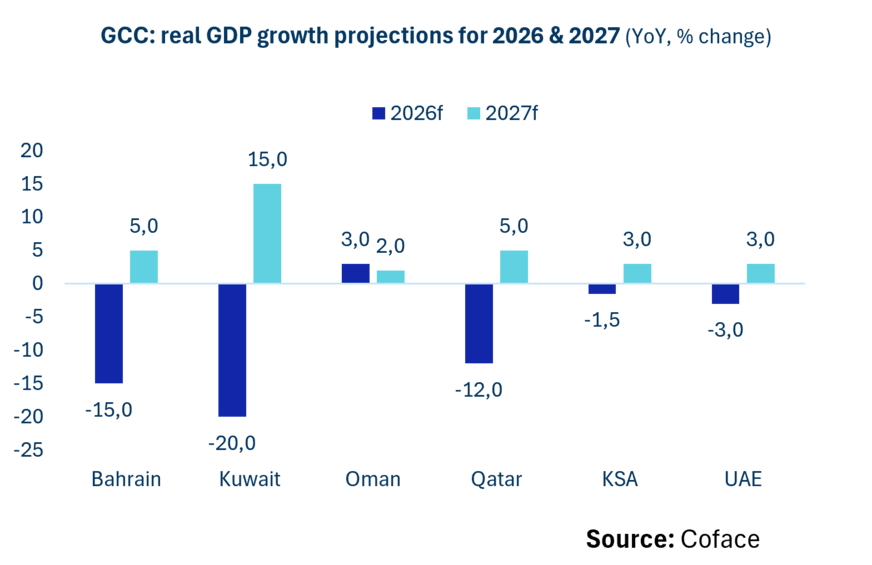
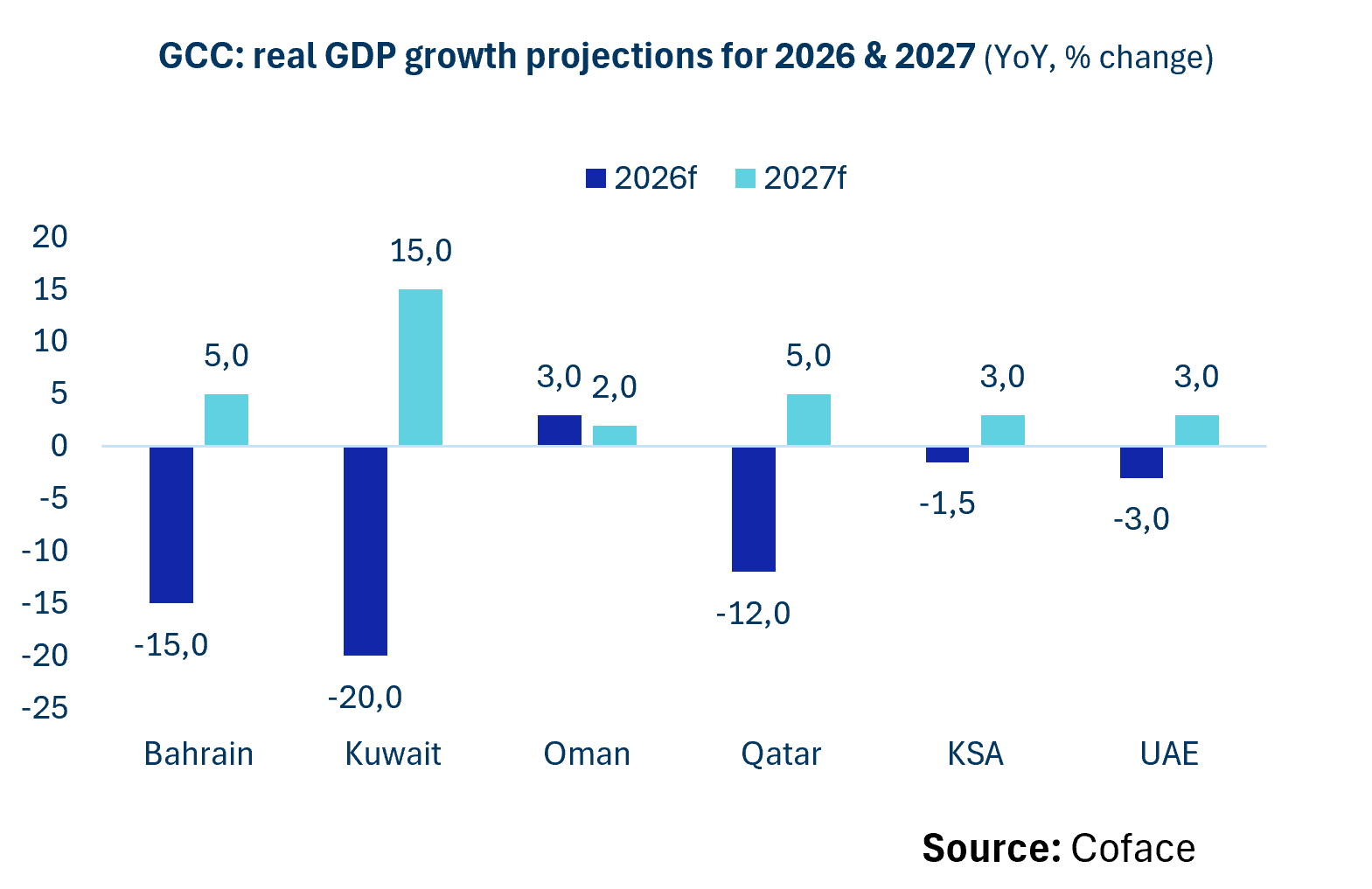
In the Middle East, economic activity is expected to contract across Gulf Cooperation Council countries in 2026. Saudi Arabia (A3 → A4) is exposed to attacks on its energy infrastructure and most of its export routes, while the United Arab Emirates (A2 → A3) and Qatar (A3 → A4) are vulnerable owing to their dependence on the Strait of Hormuz.
The agri-food sector has been downgraded in six countries. In Europe (France, Austria and Poland), the move relates primarily to the extreme weather conditions experienced during the summer of 2026. In the United Arab Emirates and Saudi Arabia, vulnerability stems more from their strong reliance on food imports than from any domestic production issues. In Argentina, the sector continues to face a challenging financial environment marked by several agricultural business failures, elevated costs and tighter margins.
A multi-speed global economy
- In the US, the economy remains resilient thanks to household consumption, AI‑related investment and a labour market close to full employment (4% unemployment rate).
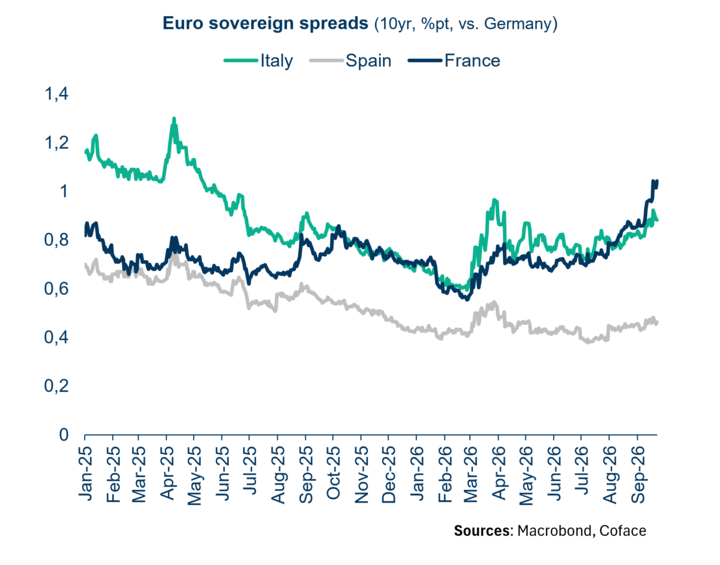
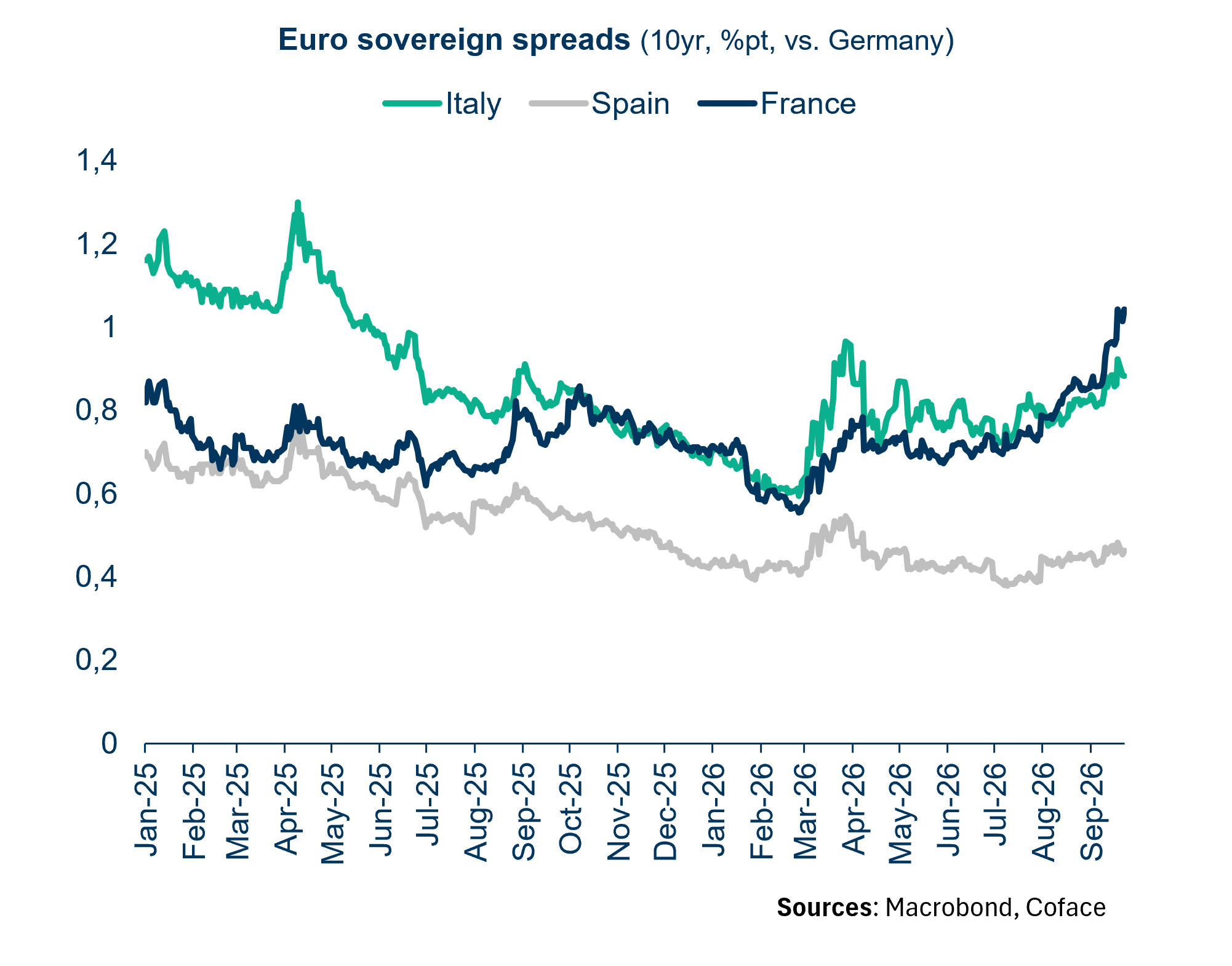
- Europe is performing slightly better than expected, supported by the resilience of the German and Spanish economies despite concerns over the sustainability of French public finances.
- In Asia, momentum is mixed. Vietnam (+8.4%) and India (+7.5%) continue to benefit from infrastructure spending and AI-related technologies, while China's domestic demand is weakening and several economies in the region (Thailand and the Philippines) are being weighed down by rising energy costs.
- In Africa and Latin America, the main risk continues to be persistently high inflation driven by rising agricultural and energy prices, particularly on back of the El Niño effect.
The prolonged conflict in the Middle East is reviving the risk of another global inflation shock.
Rising energy, commodity and transport costs are forcing central banks to maintain restrictive monetary policies, which makes the environment increasingly challenging for the most vulnerable governments and businesses.
Jean-Christophe Caffet, Chief Economist at Coface
Download the full report (pdf)


